Front of house / Restaurant table management software in Kenya
Never keep a booked guest waiting beside an empty table again
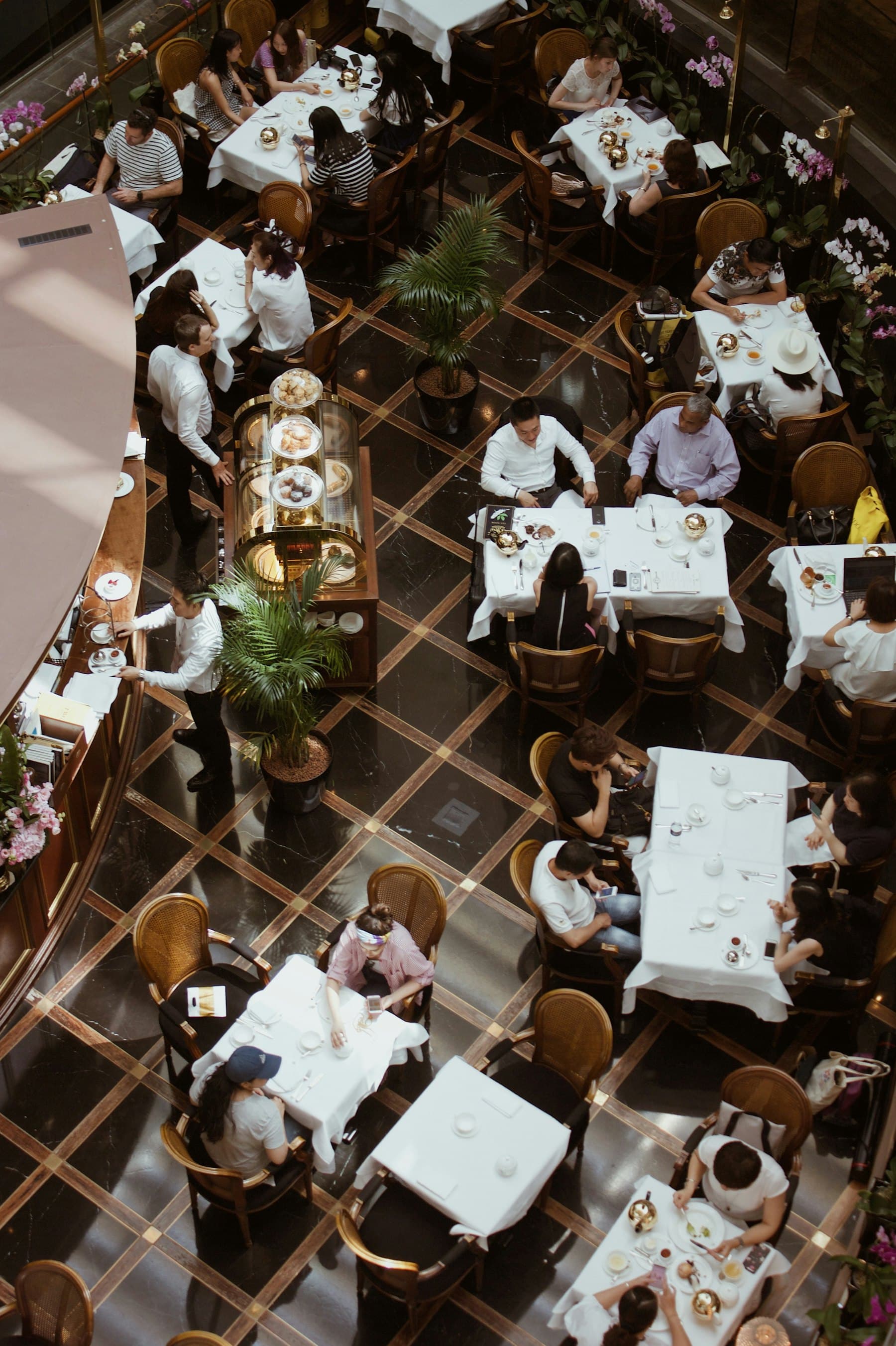
A party has paid and left, their glasses are still on the table, and a couple booked for 20:30 is standing at the bar, watching, because nobody told the host. Repeat that across a busy Friday and the second sitting starts late, guests grow restless, and one waiter carries twice the load of another. Fine Dining shows every table, waiter and course live, so your manager can read the whole room at a glance and keep the evening calm for everyone. Made for restaurants in Nairobi, Mombasa, Diani and Westlands.
Not ready for a demo? Ask a quick questionA real person replies, usually the same working day.
- Booked guests seated on time
- More from the tables you already have
- A team that shares the load
Does this sound like your restaurant in Kenya?
Are your tables sitting empty while guests wait to be seated?
You are not alone if:
- Guests wait at the bar, looking at a table that is laid and empty
- Your manager learns a table is waiting for dessert only when a guest waves
- One waiter is overwhelmed with six tables while another has three
- Your second sitting starts late every Friday, and nobody can say exactly why
- Set sitting times by habit rather than by how long guests really stay
What it is really costing you
Small moments on the night. Real costs to your guests, your team and your margins.
- Lost revenue
A free table nobody knows about
A table of four settles at 20:10 and leaves. The table sits uncleared until a waiter happens to pass, and a booked couple waits at the bar for twenty minutes, their special evening starting with a wait. On a full night, that delay rolls into every booking behind it.
- Overworked team
One section quietly overloaded
One waiter is carrying six tables on the terrace while another has three in the main room. Terrace guests wait for menus, then for bills, and by the time the manager notices, a good waiter is exhausted and apologising at every table.
- No control
Sittings planned on habit
The second sitting starts at 21:00 because it always has. Nobody has measured that tasting menu tables run close to three hours on Fridays, so late guests wait in the bar, early guests feel hurried and an extra table each night is never offered.
An example, in numbers
What fifteen idle minutes per table add up to
Say your room has 20 tables, and on a busy night each one sits uncleared or unannounced for 15 minutes before the next party is seated.
- Tables in the room
- 20
- Idle minutes per table on a busy night
- 15
- Idle table time across the room
- 5 hours
- Extra parties of two that time could seat, at 2½ hours each
- 2
- Spend per table of two
- 900
- One busy night a week, over four weeks
- 7,200
In this example, recovering idle table time on one busy night a week is worth 7,200 a month, without shortening anyone's meal.
These figures are illustrative, and scattered idle minutes do not always join up into a free table, so treat the result as an upper limit. In the demo we can look at your own dining times and sittings.
Now picture the same night with Fine Dining
Moving a birthday party to the window
Fifteen minutes into their starters, a party of five asks to move to a window table that has just come free. On paper, that move is where a main course gets lost or a bill goes to the wrong table. Here the manager simply moves them on the floor plan, and their open bill, the courses still to come and the birthday note go with them. The kitchen sees the new table number on everything not yet served, and the table they left goes straight to "to reset" for the host.
How Fine Dining helps in Kenya
One worry at a time, taken off your shoulders.
Read the whole room without walking it
Managers used to find problems by circling the floor. A live plan of every area shows which tables are free, seated, waiting for a bill or ready to reset.
- Interactive floor plans you arrange yourself
- Multiple dining areas: main room, terrace, bar, private rooms
- Separate layouts for lunch, dinner and private events
- Table status at a glance: free, seated, ordered, bill, to reset
Seat and move guests without losing an order
Merging, moving and splitting tables on paper is where orders and bills go astray. Here the bill, the courses still to come and the notes move with the guests.
- Table assignments from bookings or from the door
- Merging tables for larger parties and splitting them afterwards
- Table transfers that carry the open bill and orders with the guests
- Occupancy tracking for each area and for the whole venue
Spread the load fairly across your team
An overloaded section shows up as slow service and exhausted, unhappy staff. Seeing each waiter's tables and guests in one view lets you rebalance before anyone, guest or team member, feels it.
- Waiter assignments by section or by individual table
- Each waiter's open tables and guest count in one view
- Sections reassigned mid-service when someone takes a break
Plan sittings on real dining times
Sitting times set by habit either hurry guests or leave tables empty. Measured dining times, by menu and by night, show what the room can really hold.
- Dining duration per table, live and after service
- Time spent at each stage, from seating to settled bill
- Table turnover analytics by area, day and sitting
- Average duration for à la carte and tasting menu tables
| Table | Guests | Waiter | Seated | Stage | Status |
|---|---|---|---|---|---|
| T04 | 4 | Amira | 19:05 | Bill requested | Bill |
| TR3 | 2 | Kwame | 20:28 | Not yet ordered | 12 min |
| T15+T16 | 8 | Amira | 20:10 | Starters | Merged |
| T11 | 2 | Joseph | 19:50 | Mains | Seated |
| T08 | — | — | — | Cleared | To reset |
- Amira · Main A5 tables · 18 guests
- Joseph · Main B4 tables · 11 guests
- Kwame · Terrace6 tables · 16 guests
What changes
The difference you will feel, and the numbers that prove it.
Booked guests seated on time
The host sees the moment a table is ready to reset, so a booked party is welcomed straight to their table, not left waiting at the bar.
Measure itTables waiting to be reset, live on the floor plan
More from the tables you already have
Sittings set on measured dining times fit more guests into the night without hurrying anyone.
Measure itTable turnover by area, day and sitting
A team that shares the load
Sections are balanced before one waiter is overwhelmed, so service stays warm and even across every room, and your team goes home proud, not drained.
Measure itOpen tables and guests per waiter, live
Control of the room from one screen
The manager spots the table stuck between courses before a guest ever has to raise a hand.
Measure itDining duration per table and time spent at each stage
On a real night in Nairobi
How it works, step by step
Draw the room once
Add each area, place the tables where they stand and set how many each one seats. A private room rearranged for an event gets its own layout rather than a second system.
Seat and assign
Arrivals are seated from the booking list or the door, and each table is given to a waiter. Larger parties are placed on merged tables in one step.
Watch the service move
Sending an order or settling a bill updates the table's status, so nobody has to change it by hand. A table waiting too long between stages stands out to the manager.
Learn from the evening
After service, duration and turnover figures show how each area performed, so next week's sitting times and section sizes are set on what actually happened.
See where your Friday nights lose their calm
Show us your floor plan and sitting times in a demo and we will map, together, where the idle minutes and the stress are hiding.
Not ready for a demo? Ask a quick questionA real person replies, usually the same working day.
Every area, one system
Manage every kitchen, bar, pastry section and store from one place.
Kitchens
Hot, cold, grill or fish: each section sees only the dishes it prepares, on its own screen or printer, with allergies on every one.
Pastry sections
Desserts and petits fours go to pastry on their own screen, released with the right course so nothing waits melting on the pass.
Bars
Drinks orders go straight to the bar, with bottles, by-the-glass pours and bar stock tracked apart from the kitchen.
Stores
Stock held in each store and cold room, with counts, waste and every transfer to a kitchen or bar recorded with a name and a reason.
Dining rooms, terraces and private rooms
Each room keeps its own floor plan, tables and waiters, so the terrace and the private room run as smoothly as the main room.
Several locations
Every branch runs its own areas, and you compare them side by side, with stock moved between them in one step.
Questions owners in Kenya ask us
Tables and floor: honest answers
How can restaurants improve table turnover without rushing guests?
Restaurants improve table turnover by removing the waits guests never chose: the delay between arrival and seating, the slow bill and the cleared table nobody has reset. In fine dining the aim is not a shorter meal but less lost time around it. Table management software shows how long each table has been seated and at which course, so you can plan the next sitting on real dining times rather than guesswork.
Our managers already know the room. Why would we need a screen?
On a quiet night, they do. On a full Friday across a main room, terrace and private room, nobody can see everything at once, and the cost shows up as guests waiting and tables sitting idle. The plan does the watching, so your managers spend their time with guests rather than circling the floor. You lay out your own rooms, including separate layouts for events.
What happens to the bill when we merge or move tables?
Nothing is lost: it travels with the guests. Orders already served, courses still to come and any notes move to the new table, and merged tables share one bill that can still be split by seat at the end.
Will this push our guests to leave sooner?
No. Nothing is shown to guests, and the timings are there for the manager, not the waiter at the table. The point is to stop losing time to slow seating, slow bills and tables left uncleared, so your guests keep the pace they came for.
Can waiters see the floor plan on a phone?
Yes, so they spot their own tables' needs without returning to a terminal. The plan works on a phone, a tablet or the counter screen, and each waiter can narrow it to their own section. Managers can hold the whole venue in one view.
Front of house
Fix it once, and your whole restaurant feels it
Reservation Management
Tonight's bookings sit on the floor plan, so tables are held for the right party and walk-ins are offered only what is genuinely free.
Fine Dining POS
Orders sent and bills settled on the POS move each table's status on the plan without anyone touching it.
Reports and Analytics
Dining duration and turnover figures feed the venue reports you use to plan sittings and staffing levels.
🇰🇪 Fine Dining in Kenya
Tables and floor for restaurants in Kenya
Fine Dining is available to fine dining, hotel and chef-led restaurants across Kenya, including Nairobi, Mombasa, Diani, Westlands and Karen. Bills, receipts and reports run in Kenyan shillings (KES), and guests can pay with M-Pesa.
- CurrencyKES
- Guests pay withM-Pesa, Visa and Mastercard, Airtel Money, Cash
- E-invoicingeTIMS
- Data lawthe Data Protection Act
- Time zoneEAT (UTC+3)
Which payment methods can guests in Kenya use?
Most Kenyan guests pay with M-Pesa, so each M-Pesa payment has to be matched to the right bill. Fine Dining records every payment against its bill, whether it is M-Pesa, visa and Mastercard, airtel Money and cash. Which methods connect directly to your card machines is confirmed during the demo.
Does Fine Dining work with eTIMS in Kenya?
Restaurants in Kenya that must issue invoices or receipts through eTIMS, run by the Kenya Revenue Authority (KRA), need each sale to reach it without anyone typing it again. How Fine Dining connects to eTIMS for your business is confirmed during the demo.
How is guest data protected under the Data Protection Act?
Bookings, allergies, preferences and contact details are personal data under the Data Protection Act 2019, overseen by the Office of the Data Protection Commissioner. Fine Dining limits who can see them with staff permissions and keeps a record of every change.
Can I get a demo for my restaurant in Kenya?
Yes. Message us on WhatsApp and we will arrange it at a time that suits your service. Local time: EAT (UTC+3). We set it up with your own menu and floor plan, so you see your restaurant, not a sample one.
Book a demo
See where your Friday nights lose their calm in Kenya
Show us your floor plan and sitting times in a demo and we will map, together, where the idle minutes and the stress are hiding. We will set the demo up around your own menu, rooms and numbers, so you see your restaurant, not a sales pitch.
Not ready for a demo? Ask a quick questionA real person replies, usually the same working day.